

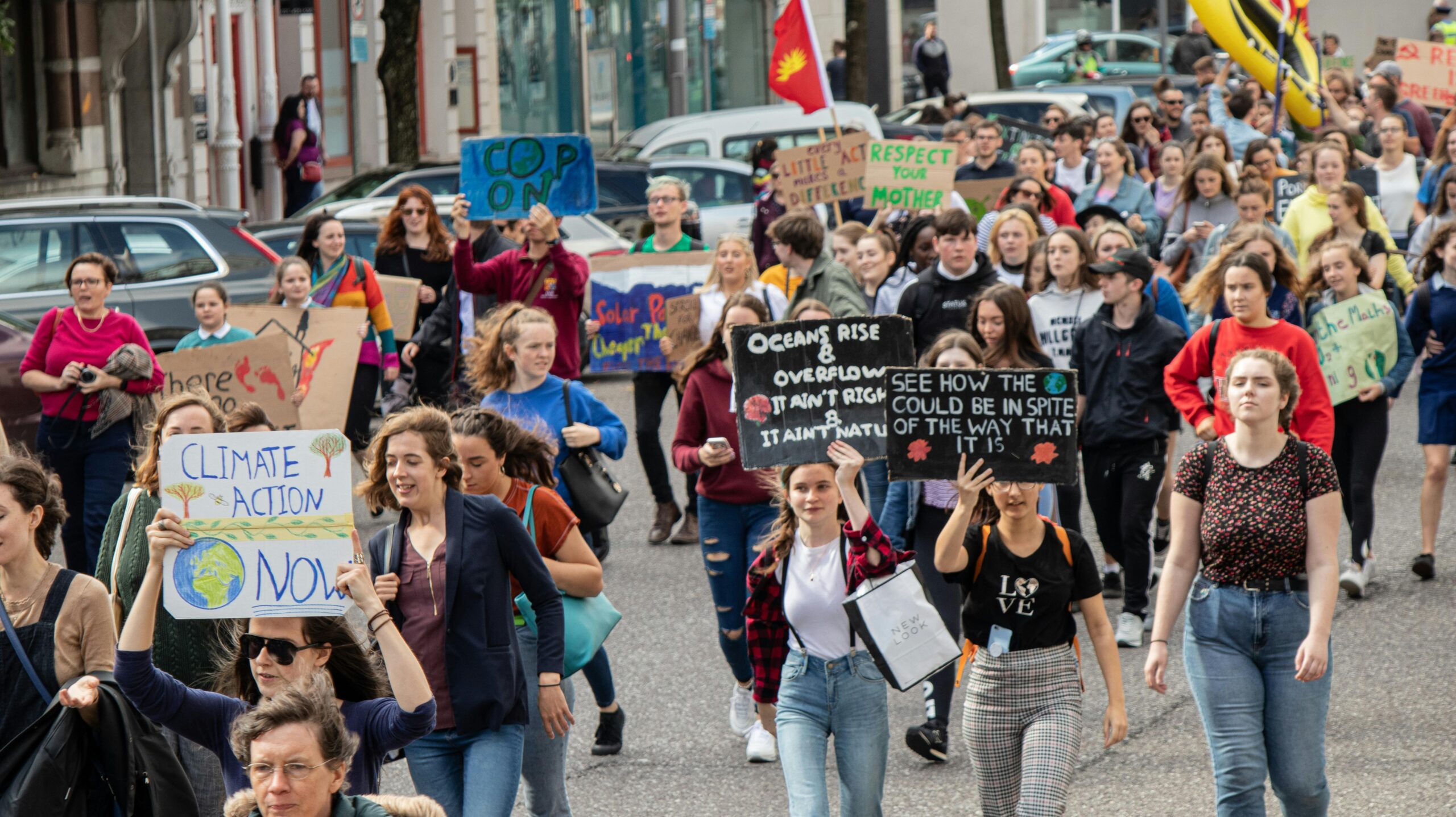
The science of standing up for science: What motivated thousands to march in 2017

Paper Title: What motivates people to defend science: Evidence from the 2017 March for Science
Author(s) and Year: Eryn Campbell, John Kotcher, Teresa Myers, John Cook, Amanda C. Borth, Edward Maybach, 2023.
Journal: Plos One (open access)
TL;DR: The March for Science was a series of worldwide rallies in 2017 to protest the misuse of science in government policies. A mobilization of these dimensions begs the question: What motivated so many to stand up for science, and what can we learn from this?
Why I chose this paper: The scientific community is often labeled as an apolitical, isolated bunch that only minds its own business, but the March for Science proved otherwise. Still, I believe that scientists should engage more often in political action. So, to build a more politically engaged scientific community, we need to understand what sparked an international mobilization of over a million attendees.
Emotions are among the biggest triggers for action, as demonstrated by protests against threats such as social injustice, systemic inequality, and inattention to climate change. With this in mind, Eryn Campbell et al. aimed to figure out how fear, anger, and people’s perceived ability to face a threat influenced one of the biggest coordinated efforts to support science in history.
The Background
The March for Science
On April 22, 2017, a series of marches took place in over 600 cities around the world to protest anti-science policymaking. The first march was known as the Scientists’ March on Washington, and was created in response to the U.S. President Trump administration’s approach towards scientific research. In addition to this march, many satellite events were held worldwide, as well as subsequent marches, also on a global scale, on April 14, 2018, and May 22, 2019.
To understand what motivated march participants, researchers Campbell et al. conducted a survey of subscribers to the March for Science LISTSERV (an email list management software) to analyze their attitudes and motivations when facing a threat to science. This survey aimed to test a series of hypotheses about the role of a threat, individuals’ confidence in their ability to face it, anger, and fear in predicting their intention to advocate for science.
The Methods
“Thinking will not overcome fear, but action will.” – William Clement Stone
The LISTSERV included 213,000 individuals, but only 4442 responses were considered for the study. The reason was that most participants didn’t complete the survey, and among those who did, only those who answered the section about perceived threats to science and who were U.S. residents were included. Additionally, a set of questions about their population characteristics (gender, age, etc.) was asked.
The questions regarding threats to science were constructed from six communication and social science concepts and were designed to measure people’s intentions to engage in the defence of science. These measures were:
- Self-efficacy, or an individual’s confidence in their ability to achieve a specific goal or respond to a threat.
- Response efficacy, or an individual’s confidence that performing an action will have the desired effect.
- Perceived threat, or a known or unknown danger to science.
- Fear.
- Anger.
- Advocacy intentions, or the individual’s intentions to defend science.
The authors then built a structural equation model that contrasted each measure against the others to determine whether they influenced each other and to what degree. In turn, these relationships could explain how and why participants decided to act. For example, a strong relationship between fear and a perceived threat could indicate that, when perceiving danger, the participants felt more frightened. In turn, a negative link between self-efficacy and fear would signal that the more confident the participants felt about their abilities, the less fearful they were. Similarly, comparing individuals’ fear, anger, or confidence against their advocacy intentions might indicate how emotions or feelings of self-efficacy influence participants’ intentions to defend science.
The Results
What makes us stand for science?
As the researchers hypothesized, the greater the threat to science that participants described, the greater their sense of fear and anger. In turn, as their emotions increased, especially their anger, they became more eager to advocate for science, particularly if they believed their efforts could make a difference. Additionally, feeling confident in themselves made them less fearful, slightly angrier, and more motivated to take action.
According to the model, the path from efficacy to advocacy is clear, as both belief in self-efficacy and the efficacy of collective actions lead to a desire to defend science. But, above all, the strongest relationship in the model was that of self-efficacy and advocacy intentions, meaning that, at least among the measures studied, nothing could drive an individual to stand for science more than confidence in their ability to cope with a threat.
The Impact
“Let us not look back in anger, nor forward in fear, but around in awareness.” – James Thurber
Malcolm X said, “Usually, when people are sad, they don’t do anything. They just cry over their condition. But when they get angry, they bring about change.” Although anger proved to be among the most effective triggers for people to engage in action in this study, this doesn’t mean that when communicating science, we should try to make readers angry. On the contrary, this is not a call to frustrate scientists; instead, this study helps predict when and why one might feel inclined to take action, and what type of messages should prove effective to spark action.
For example, the results suggest that helping people feel more confident that they can make a difference has the greatest potential to engage them in a cause. Showing how serious a threat is can also inspire them to take action, especially if they recognize the impact of their efforts.
In my opinion, these findings make sense in light of the March for Science, as the global fear of the damage that could be done to science sparked an international movement that only grew and grew as its spotlight grew brighter.
Finally, the researchers say it best: “Further understanding of how to increase people’s intentions to engage in advocacy […] is crucial to growing and sustaining social movements in the defense of science.”
There’s still much to learn about how effective mobilizations have been constructed, but understanding that certain feelings and trust in the solutions play a major role is vital for fostering a socially active scientific community. Maybe then we might enter, as the authors suggested, “a new era of heightened political engagement by the scientists and their supporters.”
Written by Diego Ramírez Martín del Campo
Edited by Paula R. Buchanan and Madeline Fisher
Featured image credit: Robin Erino