
Near, Far, Wherever You Are? How Distance from Science Affects Perceptions

Paper Title: Psychological distance to science affects science evaluations
Author(s) and Year: Bojana Većkalov, Natalia Zarzeczna, Frenk van Harreveld, Bastiaan T. Rutjens (2025)
Journal: Journal of Social Issues (open access)
TL;DR: The world of scientific research can often seem foreign to those outside of it. Researchers studied how psychological distance from scientific research—covering aspects like where the research is done, how approachable scientists doing the research are, and when the research will have an impact on our lives—affects perceptions of science, and found that research that’s psychologically close tends to be viewed more positively, with less skepticism, and as more credible.
Why I chose this paper: I chose this paper because I recently started research on dialogue between individuals with opposing viewpoints, and it has become clear to me that while communicating facts and evidence is important, listing facts and figures isn’t the best way to build trust or to change someone’s opinion. Consequently, I became interested in how communication itself affects how people think of science. Research about how people form their opinions about science is critical to understanding how to make it more approachable. When communicating about science, considering the psychological distance created by the way the research is presented is certainly a valid strategy to improve acceptance of new technology.
What comes to mind when you think about scientific research? Do you picture people working in a familiar environment on something that will directly impact your life, or do you picture people far away doing something mysterious and incomprehensible, surrounded by strange instruments and screens covered in numbers? In a world where scientific discoveries are often granular and trust in science is under threat, it’s important for scientists to both do good research and be able to communicate about it in a way that seems trustworthy. In this study, the researchers investigated how the distance people perceive between themselves and science affects their opinions about it.
The Background
The Impact of Trust in Science
Not even the most important scientific inventions make a difference if they’re not widely adopted. More effective vaccines, more nutritious crops, and more environmentally friendly renewable energy technologies—they all just sit in the proverbial garage unless people are willing to use them. As a society, our trust or distrust in science affects critical aspects of our behavior, such as whether we fund scientific research, what we choose to purchase, and what new technologies we adopt. These types of behavior in turn affect how plentiful and nutritious our food is, how quickly diseases spread, and how intense climate-related disasters are. Consequently, the level of trust that the public has in science has a very real and tangible effect on society.
Psychological Distance from Science
Because trust in science has such a large impact on society, research on why people accept or reject science has increased in recent years. One area that may impact impressions of science is psychological distance to science, which encompasses a variety of factors:
- Hypothetical distance, or how clear and observable of an impact it will have;
- Social distance, based on how approachable and/or similar the people doing the science are perceived to be;
- Temporal distance, or how long it will be until the research is put into effect; and
- Spatial distance, referring to the area where the research is relevant.
The Methods
Research participants in the UK were given an initial survey on their attitudes and opinions about a specific field of science (either genetically modified foods or nanotechnology) as well as other factors that could influence their opinions, such as scientific knowledge, demographics, and general trust in scientists. In order to prevent this first survey from influencing the participants’ final answers, researchers waited a week before presenting the participants with a “news article” about the field of science they were surveyed about previously, which was framed as either psychologically close or distant. Afterwards, they were surveyed again about their opinions on the field of science.
The researchers surveyed a total of 3,540 people across three separate studies about their skepticism and positive or negative feelings towards the science in the article, as well as how credible they believed it to be.
The Results
When all the data was combined in a meta-analysis, the researchers observed that reading an article positioning research as psychologically close resulted in lower skepticism, higher credibility ratings, and more positive attitudes towards the science being described. However, the effects of the psychologically close articles about science were small and consequently were not identified in every version of the study. This may be because the study participants only read one article with small differences between the psychologically close and psychologically distant versions, which may not have a significant impact on people’s pre-formed opinions of science. Psychological distance was also found to be associated with how personally relevant study participants rated the specific field of science. The research supported personal relevance being the crucial step between psychological distance and opinions about science.
The Impact
These findings carry implications for science communication research and practice by showing the effects of psychological distance on positive feelings about science. For example, researchers who study persuasion may be interested in psychological distance as a relevant factor. These results also suggest that further research is needed to test the effects of psychological distance in different fields of science and in a variety of settings. Emergency situations such as the COVID-19 pandemic may change the “rules” of how we talk about science, and psychological distance should also be studied in non-Western and minority contexts.
Overall, presenting science in a way that emphasizes psychological closeness is just one potential strategy to improve public opinions of science. A prime example for the importance of the relationship between science and society is vaccine uptake. There were more measles cases in 2025 than any other year since 1991 because of decreasing vaccination rates. Vaccines are currently a highly politicized topic, but they are also representative of how trust in science and individuals’ choices can have a very real impact. In this study, although the effect of psychological closeness was shown to be small, consistent use of psychologically close language could help bridge the gap between science and society, which may help build a world that is more open to adopting helpful, science-backed changes.
—
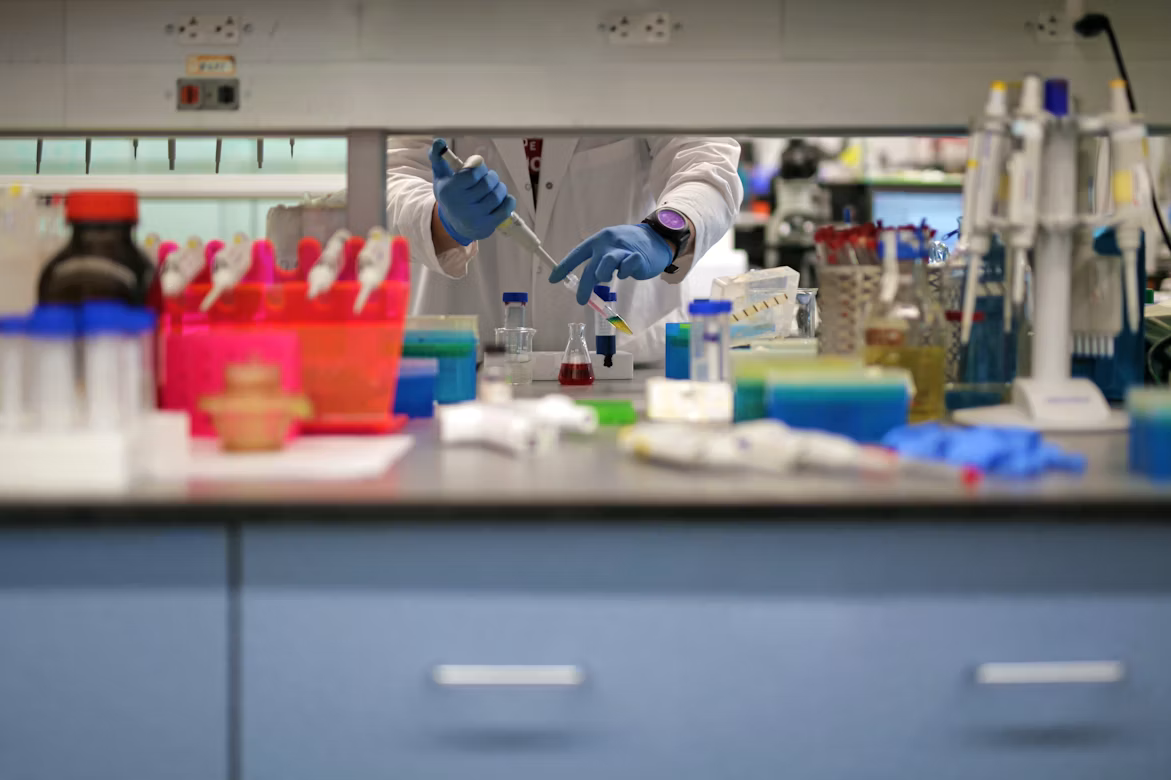
Alt text for featured image: Behind a lab bench, a scientist’s arms can be seen pipetting a pink liquid into a tube.
Written by Katelyn Miyasaki
Edited by Brita Kilburg-Basnyat and Mykyta ‘Nik’ Kliapets
Featured image credit: Adam Bezer from Unsplash (Unsplash License)
The title of this bite contains lyrics from the song “My Heart Will Go On” by Celine Dion.