
Science Communication Sails to Svalbard: Insights from the SEES-2022 Expedition for Public Engagement in Arctic’s Climate Challenges

Paper Title: Public engagement in polar science: perspectives from tourists and scientists on the SEES-2022 expedition to Svalbard.
Author(s) and Year: Nathalie A. Steins; 2025
Journal: The Polar Journal (open access)
TL;DR: This study examines a polar expedition to Svalbard, Norway to understand how combining polar tourism with science and media promotes public engagement with the Arctic’s climate issues. By examining the perceptions of participants, it shows that involving tourists in scientific projects with scientists can enhance tourists’ interest in Arctic climate change and strengthen science communication and outreach. Also, the media shared this experience with the wider public and contributed to raising greater awareness and support for polar regions.
Why I chose this paper: The only experience I have with polar regions is watching documentaries about them on television. They have always fascinated me with their beautiful landscapes, unique wildlife and their crucial role in safeguarding life on Earth. Although polar regions are hard to reach by people, they have become so vulnerable due to human impact. Conservation efforts need to bridge this gap so that more people can understand the threats these ecosystems face. In this respect, this paper stood out because it shows a special case of public engagement in the Arctic’s climate change by integrating tourism and science in a touristic polar cruise.
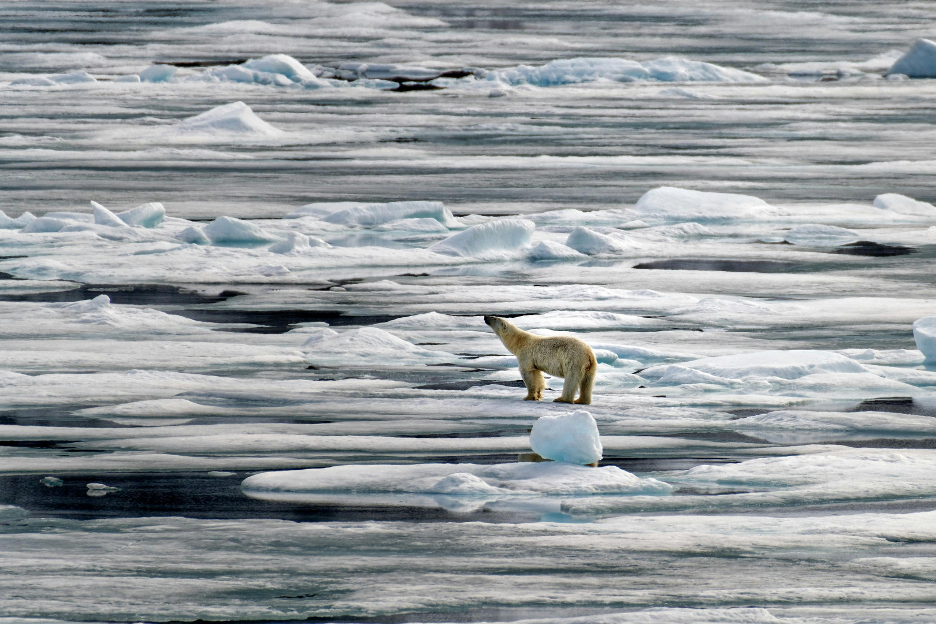
A heartbreaking photograph of a polar bear stranded on melting sea ice, experiencing habitat loss (Fig. 1), exemplifies how Arctic warming leads to a struggle to survive. Arctic climate challenges are affecting people and ecosystems worldwide and need recognition by a wider audience to increase awareness and support to save the Arctic’s frozen ocean and surrounding landscapes. With this aim, the author explores whether public engagement with climate change on an Arctic cruise would improve by directly involving tourists in polar science.
The Background
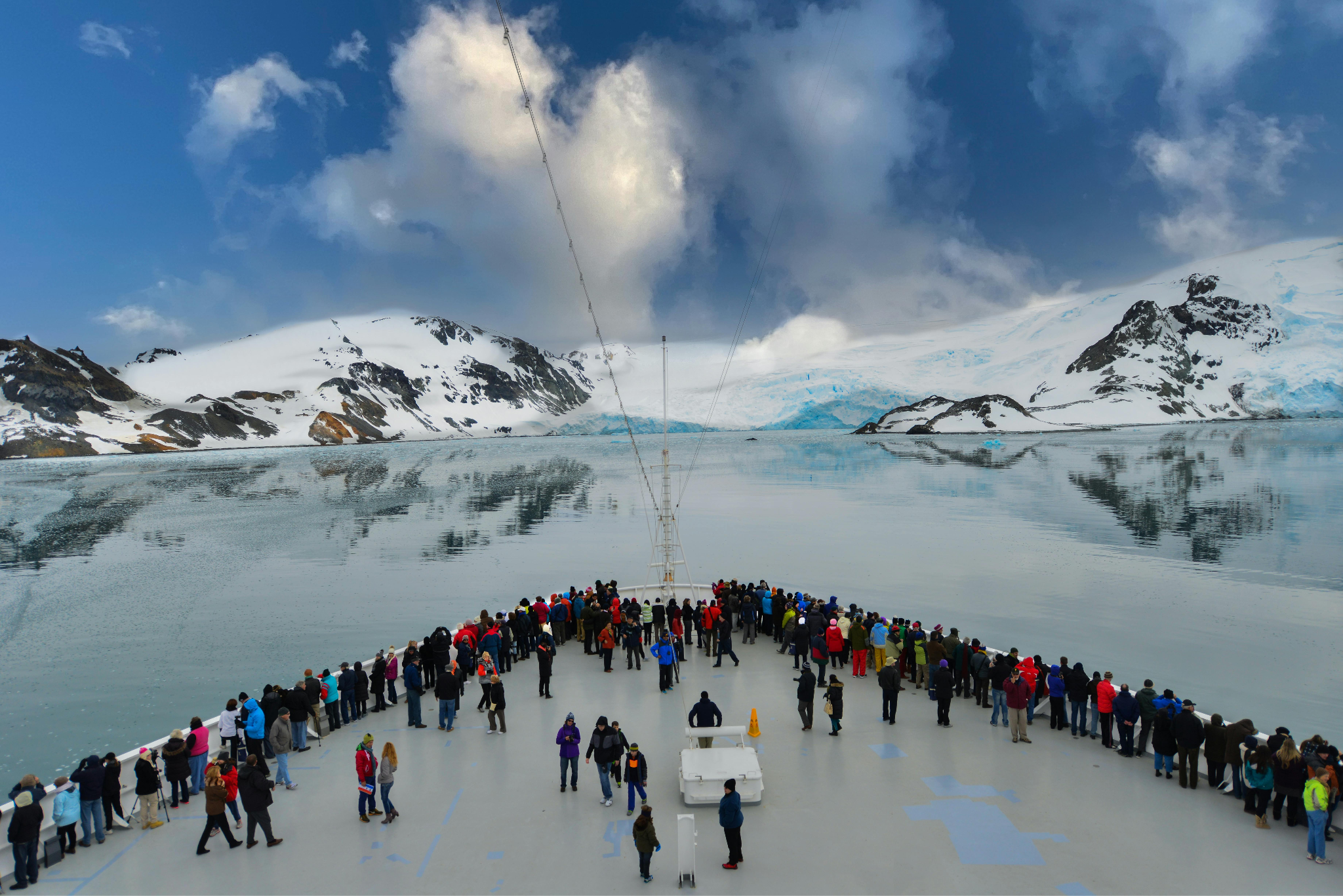
In 2022, Arctic Academy transformed a touristic polar cruise into an expedition by bringing together tourists, scientists, and the media, known as the Netherlands Scientific Expedition Edgeøya Svalbard (SEES). SEES-2022 replicated the first SEES expedition in 2015 and aimed to build on research findings from 2015 and continue monitoring the effects of climate change. Besides studying Arctic warming, SEES-2022 similarly pursued the key goal of enhancing public engagement with climate change by encouraging direct interactions between scientists, tourists and the media.
In recent years, human-caused climate change has warmed the Arctic faster than anywhere else on Earth. If preventive measures—such as reducing greenhouse gas emissions—are not implemented effectively, life on Earth will inevitably face irreversible consequences due to disruption of global climate systems and damage to multiple ecosystems. This necessitates communicating the Arctic’s climate issues to a wider public to strengthen conservation efforts.
However, communicating climate change to non-expert audiences is challenging. This is due to several reasons including factors restricting public involvement. For instance, public engagement with Arctic warming can be improved if people get a chance to observe its effects in person but the remote location of the Arctic makes it even harder for people to reach there and learn through their personal experiences.
In this respect, touristic polar cruises present a unique opportunity for public engagement by facilitating firsthand experiences of these regions through explorations of the landscapes and wildlife. The SEES-2022 expedition took advantage of this and combined tourism with science by actively involving tourists in research projects, a key element in public engagement. Additionally, the study explored how media coverage of the expedition can help raise greater public support by helping people build stronger ties with the Arctic region.
However, polar cruises integrating tourism with science, like SEES-2022, are not very common. So, this paper uses it as a case study to answer how interactions between tourists, scientists and the media can support public engagement and perception of science with climate change through science communication.
The Methods
The expedition brought together 102 participants, including 35 tourists, 52 scientists from different disciplines, and seven journalists. Most tourists (85%) were “environmentally informed” participants and intentionally chose to join SEES-2022.
The expedition integrated onshore fieldwork with onboard lectures and laboratory activities. These activities were part of different themes such as archaeology, biodiversity, climate change, genetics, pollution, social science, and Arctic ecosystems. Each theme included several research projects, with 43 science projects in total, investigating different aspects of a specific category. Within the pollution category, for instance, the marine litter project aimed to investigate the origin and causes of plastic waste accumulation on Svalbard shores while others focused on assessing mercury levels, microplastics and chemical contaminants in soil, wind, and vegetation. Participation in science projects was optional and tourists who took part often assisted scientists with multiple hands-on activities.
The study examined how participants perceive and experience public engagement based on data from online questionnaires, participant observation, and interviews using both qualitative and quantitative research methods.
The Results
Tourists participated in Arctic research
The pollution-related projects had the highest tourist participation (33%). Among those, the marine litter project was the most popular, with an attendance of 25%, as tourists were motivated by the idea of leaving a cleaner shore. According to participant quotes, assisting scientists increased tourists’ interest in Arctic warming because tourists learned about the complexity of science behind it and observed in person the effort and time needed for research.
Onboard lecture programs, laboratory experience, and friendly mealtime discussions also contributed to active involvement of tourists in science through dialogue with scientists. Most tourists (96%) highly valued interacting with scientists as they developed a better understanding of climate change by asking questions and learning directly from scientists. Mealtime discussions were deeply respected by both groups because they fostered mutual learning.
Approximately 93% of tourists expressed interest in joining scientific research before the expedition, but about 81% confirmed participation after the trip. Tourists mostly preferred to take part in research when scientific activities were part of their tourism schedule. Challenges associated with weather and polar bears also prevented tourist participation. However, tourists who participated were strongly impressed by the expedition and more than 70% encouraged event coordinators to organize similar expeditions to the Arctic in the future.
SEES-2022 cruise was a learning experience for scientists
Tourist participation in research also helped scientists enhance their skills in science communication. For example, scientists had to focus on explaining complex scientific concepts in a clear and accessible way. Collaborating with tourists also allowed scientists to understand which research questions the public was more interested in and how they can present their research in a way that resonates with society. Therefore, tourists prompted scientists to reframe their research goals and communication skills. In fact, one policy representative stated that:
“It’s actually better than a science communication course you can take as a researcher, so to speak. [. . .] What can I do, what should I show, and how should I explain it?”
Media amplified the expedition experience
The expedition resulted in the production of more than 90 news stories for various media outlets. Although direct public engagement with SEES-2022 was limited to participants, media coverage effectively extended this experience to a broader public. This was demonstrated by news stories reaching hundreds of thousands to millions of people per day by television, websites and newspapers.
The Impact
Taken together, these results show that SEES-2022 did significantly strengthen science communication and public engagement in Arctic climate change by creating an experience that included hands-on activities, direct interaction and mutual dialogue, and media coverage. Tourists and scientists valued this experience as it facilitated learning with observation, practice, and discussion.
Moreover, science communication and outreach in the presence of the media could serve as an effective approach to facilitate greater public awareness and support for polar regions. Although news stories create an indirect experience, they could align well with the interests of a wider audience if they cover the interactions of tourists with scientists. In this respect, the study reported news stories about the expedition reaching many people daily through various media outlets.
These efforts can help foster personal connections with the Arctic. The author further suggests that combining tourism and science in a polar cruise like SEES-2022 may be more successful in encouraging pro-environmental behavior than conventional polar tourism. However, this was not directly assessed in the paper and future studies are needed to see if SEES-2022 succeeds in translating people’s attitudes into actions.
Overall, SEES-2022 provided a platform where scientists can engage the public with polar science through hands-on research activities and mutual dialogue in discussions and lectures. Moreover, this strategy of combining tourism and science may inspire future initiatives that aim to foster deeper connections between vulnerable ecosystems, like the polar regions, and the public.
Written by Ceren Tunçer
Edited by Holly Dear, Anika Zaman, Krystal Vasquez, and Mykyta ‘Nik’ Kliapets
Featured image credit: Frans van Heerden from Pexels (CC0 license)