
From Patients to Researchers: How Patients Helped Define Long COVID

Paper Title: Patient-made knowledge networks: Long COVID discourse, epistemic injustice, and online community formation
Author(s) and Year: Ammari, Tawfiq; 2026
Journal: Social Science & Medicine (open access [https://www.sciencedirect.com/science/article/pii/S0277953626006696?casa_token=2FS6KQob6u4AAAAA:_Hlfd_5ilf1p7BCZ3V-fHJTykfoxFYvSItrVwZnapUjJWi_44KTL_E2hF0toDAOo1DGAw77t8CY])
TL;DR: Twitter, now known as X, played a unique role in the story of long COVID’s identification and definition. Researchers analyzed 2.8 million tweets from 2020 to 2022 to better understand how people came together to define, research, and share information about long COVID. Although long COVID was a uniquely prominent and contemporaneous case, the formation of and communication within the long COVID community may inform future efforts to center patient experiences in disease and to encourage non-traditional forms of knowledge gathering.
Why I chose this paper: I’ve been volunteering in advocacy for COVID-19 prevention and research for the last few years and mask regularly in my daily life because of the underestimated frequency and severity of long COVID. I read this paper because I was interested in how long COVID patients helped identify their own condition through non-traditional means of doing research. The unique circumstances around COVID-19 and long COVID allowed patients to rapidly collect data using social media and construct a knowledge community. I hope that by learning about how the long COVID community worked to define their condition and have it formally recognized, we can better understand how to build knowledge networks and to center patient experiences in medicine.
How do new diseases get discovered? We’d usually think of scientists squinting at samples in labs, or doctors seeing a pattern in their patients: something happening in an ivory tower far away. But in 2020, when the world was focused on the threat of COVID-19, patients managed to uncover a related new disease — long COVID — through Twitter.
The Background
But how did the long COVID community actually come together on social media to accomplish this goal? Through analyzing 2.8 million tweets, researchers sought to explore the characteristics of the online long COVID community during the height of the pandemic: what they were talking about, what kind of people were talking, and how the community was structured.
As a disease with an enormous range of symptoms, many of which are nonspecific, long COVID faces an uphill battle for recognition. Through the traditional medical system, certain conditions are more easily recognized than others. For example, ME/CFS (myalgic encephalomyelitis/chronic fatigue syndrome) and long COVID, which have less specific symptoms and no traditional biomarker-based test, are frequently ignored or misdiagnosed by medical practitioners. This is one example of epistemic injustice. Epistemic injustice describes systematic harms related to knowledge and information. In medicine, this can take the form of the tendency to ignore more subtle patient experiences and those of certain patients who are seen as less knowledgeable due to factors like race, gender, and social class. It can also refer to the lack of terminology around specific conditions, leaving patients unable to put their experiences into words.
In this study, Dr. Tawfiq Ammari, a researcher at Rutgers University, describes how the long COVID community developed into an epistemic community, defined as a group of subject-matter experts who share beliefs and ways of validating knowledge. Although long COVID is still a condition in urgent need of research on diagnoses and treatments, its community was able to quickly address the lack of language around their experiences, produce patient-led research that made their condition visible, and get long COVID formally recognized as a condition by the World Health Organization within months. Although long COVID was a highly unique scenario that benefited from the attention on COVID-19, understanding how patients can organize, collaborate, and produce knowledge could help reduce epistemic injustice in the future.
The Methods
The research team collected all tweets mentioning or hashtagged with “long COVID” and variants of it from May 20, 2020, to June 30, 2022. In total, they gathered 2.8 million tweets from more than 400,000 unique users and used a computational technique called topic modeling to identify common topics. Two researchers interpreted the 47 resulting topics and analyzed about 5,000 (around 100 per topic) of the tweets that best fit the topics using a critical discourse analysis approach. They then identified seven themes that connected those topics.
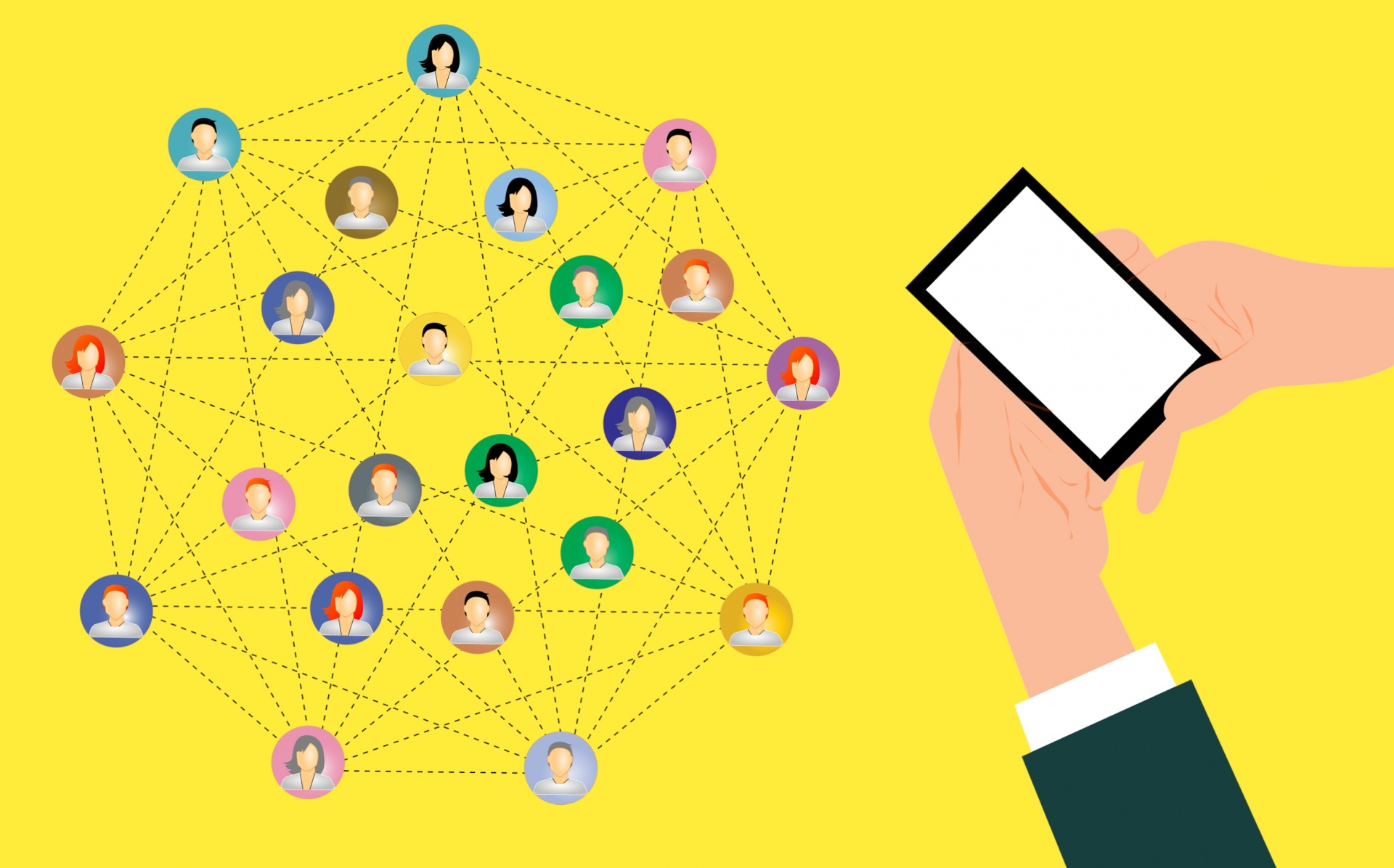
To look at the structure of the network as a whole, researchers analyzed which users mentioned each other and identified which users were most central in forming links between people. These central users were framed as “information bridges,” and were investigated in further detail. Two researchers analyzed the tweets and bios from one hundred “information bridge” users and sorted them into four major categories. The researchers based their categories on the commonalities and patterns they observed in their data through a process known as inductive coding. The map of user mentions was also analyzed through Exponential Random Graph Models to determine how the likelihood of Twitter mentions between users varied based on characteristics like the topics and tone of their tweets and whether users were mutuals.
The Results
Tweet Themes
Seven major themes emerged from the tweets:
- Symptoms and personal trajectories
- Epistemic injustice, resource sharing, and community building
- Connecting to ME/CFS and other contested illnesses
- Reframing personal responsibility
- Schools and children
- Global policy variation
- Disability, rehabilitation, and healthcare access
Across these areas, the community gathered, analyzed, and validated data primarily based on their lived experiences, and used that data to make policy recommendations. For example, in the area of “symptoms and personal trajectories,” structured illness diaries and patient-led studies with thousands of respondents led to documentation of long COVID symptoms far quicker than traditional medical systems and recognition from global health authorities. By “connecting to ME/CFS,” which shares many symptoms with long COVID and frequently begins after viral infections, people with long COVID found solidarity and guidance. And the international long COVID network compared outcomes from different institutional COVID mitigation strategies within the theme of “global policy variation” and advocated for policies to reduce institutional harm and improve healthcare/disability access.
The researchers concluded that the overall focus on knowledge production and validation classifies the long COVID community as an epistemic community, and one that demonstrated the ability of patients to establish and challenge medical knowledge.
Roles in the Community
Four major community roles were identified:
- Patient Advocates and Lived Experience Experts included individuals as well as advocacy groups and patient-led research initiatives, focusing on patient experiences as real evidence.
- Healthcare Professionals and Scientists served as a connection between patients and the professional research and clinical communities.
- Research Coordinators and Citizen Scientists designed systems to share knowledge.
- Community Organizers and Information Hubs designated trusted sources as well as sources that downplayed long COVID and organized campaigns.
Collectively, these roles reflect the focus of the community on generating knowledge, with a secondary emphasis on policy goals.
Community Connections
Through analyzing the connections in the network with Exponential Random Graph Models, researchers found high mutuality — people who mentioned each other often received reciprocal mentions, suggesting a lack of hierarchy and the prevalence of cooperation.
The connections in the community also reflected the focus on knowledge building. Neutrally worded tweets received more engagement than positive or negative ones, suggesting a focus on factual information. Furthermore, tweets under the theme Epistemic Injustice, Resource Sharing, and Community Building were more likely to receive engagement, whereas tweets under the Global Policy Variation theme were less likely to receive engagement, which may likewise indicate a focus on information over policy.
The Impact
Twitter served as a unique gathering place for long COVID patients to find each other and to organize, resulting in rapid data collection and knowledge production. Along with the incredible efforts of its community, long COVID gained recognition quickly due to the public’s attention on COVID-19 and the past efforts of similar disease communities. However, long COVID still lacks appropriate treatments and prevention strategies, and patients continue to be victims of epistemic injustice. Still, by better understanding the successes of the long COVID community in quickly gathering information, amplifying knowledge, and utilizing key professionals and clinicians, other communities may be able to generate new knowledge and make the medical landscape more just.
Written by Katelyn Miyasaki
Edited by Holly Dear, Ceren Tuncer, and Diego Ramírez Martín del Campo
Featured image credit: mohamed mahmoud hassan @ PublicDomainPictures.net