
Getting hands-on with brain research in a suburban town: assessment of a science fair through structural barriers


Paper Title: From event enjoyment to career aspirations: how inclusive science engagement shapes participant perspectives
Author(s) and Year: Soumaiya Imarraine and Nicole Ortiz; 2025
Journal: Journal of Science Communication (open access)
TL;DR: The authors evaluated the effects of an inclusive science fair on people’s perceptions of science and scientific careers within a community underrepresented in scientific careers. From survey analysis, they concluded that the science fair, through active engagement and interaction, was successful in increasing interest in scientific careers.
Why I chose this paper: When I read this paper, I realized that my previous experience with science outreach events was mostly attending activities held on university campuses. To no one’s surprise, I was surrounded with students and researchers who are already familiar with scientific topics. I found the findings of this study insightful as they show how science outreach can be translated into an inclusive and accessible event for underrepresented communities and impact their perceptions of science.
The life story of Carl Sagan—an American astronomer and science communicator—captures how reading science and science-fiction books and visiting the 1939 New York City World’s Fair as a child influenced his passion for science. The 1939 New York City World’s Fair attracted millions of visitors including Sagans, a working-class family with no prior interest in science. Even if the event was highly publicized and received support from the US Government, its capacity in reaching different communities, including those underrepresented in science, hints at the existence of inclusive strategies in its design.
Thus, Carl Sagan’s story could serve as an example of how inclusive science communication and outreach can shape the attitudes of people towards science, particularly those in underrepresented communities. With this study, Imarraine and Ortiz wanted to answer if a single, inclusive science fair would influence the interest of people of a low-income community in science and scientific careers.
The Background
The aspiration to pursue science as a career path has its roots not only in formal school education but also in science communication activities that are easily accessible by the public. Yet not everyone has the same chance to benefit from those activities to decide if science is for them. The so-called “structural barriers”—hidden in the rules and policies of societies and institutions—lead to fundamental inequalities within a society favoring the privileged to reach opportunities while leaving the underrepresented excluded. Consequently, people with the highest science capital engage more with science and pursue scientific careers, known in sociology as the Matthew Effect.
Structural barriers affect communities based on socioeconomic status, age, gender, race, disability and language. For example, a report by UNESCO Call to Action draws attention to gender inequality in scientific careers that leads to fewer women choosing science related professions. It further emphasizes the need for inclusive strategies to encourage women to pursue science careers. At its core, science needs diverse opinions to resolve the challenges we face worldwide, and therefore more people choosing science as a career path. This is achievable only when science can equally reach all communities within a society.
So, can inclusive science communication and outreach serve as a powerful tool to overcome structural barriers and enhance interest in scientific careers for communities underrepresented in science?
The Methods
The idea to boost inclusion of underrepresented groups in scientific careers motivated the authors to organize a science fair in a low-income suburban town near Paris during the Brain Awareness Week.
The event offered the opportunity to perform hands-on experiments and interact with scientists. Participants tried to find answers to the scientific question of how we can study a brain under stress by attending five different booths. Each booth demonstrated brain research from a particular perspective: evolution, chemistry, genetics, programming, and scientific careers. Scientists at the booths used lay language to convey scientific information, favored visual content instead of text, and encouraged friendly discussions about brain research.
The science fair was promoted through various media outlets and communication with local schools to reach a broad audience. It was free of charge and took place in a sports center that was easily accessible by the residents. Those participants who volunteered, completed pre- and post-event questionnaires anonymously to reflect their experiences, perceptions of science and interest in a science career.
The Results
The science fair succeeded in reaching more women (62.5%) than men (37.5%). Almost all participants (94.6%) acknowledged the significance of science for society before the event. Even so, many women and less than half of the men stated that they had not thought of science as a career path before.
The event increased participants’ interest in science with the majority (92.5%) reflecting high enjoyment. Participants mostly enjoyed chemistry and genetics booths and suggested including extra booths and more hands-on experiments to make the event more appealing. Learning new things and interaction with scientists were the other factors that contributed to high enjoyment.
Another major finding was the event’s potential to influence people’s perceptions towards scientific careers (see Figure 1), even for those people who had reported no previous interest in science. 47% of the participants reported increased interest and the main reason for this was the opportunity to engage with hands-on experiments.
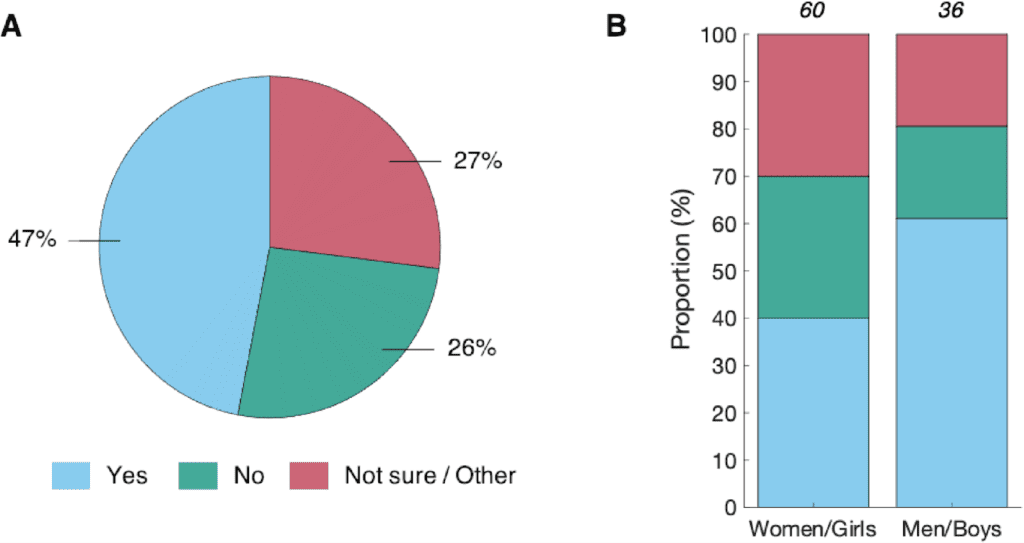
Figure 7 in the paper used under CC BY-NC-ND 4.0.
The Impact
This study demonstrated that a single outreach event held in a low-income community could influence perceptions of scientific careers among people with low science capital. By creating a welcoming, inclusive, and engaging environment, the event underlined the importance of active learning, interaction, feeling of inclusion, and participant feedback in enhancing interest of a low-income community in scientific careers.
The driving force for strengthening curiosity in scientific careers lies within the structure of outreach frameworks that both stimulate interest and provide an enjoyable design. The authors incorporated active learning—experimenting and discovering new things—into the design of science fair to meet those two criteria. Contrary to activities based on passive observation, an alternative format featuring active learning provides an engaging and inclusive strategy for science outreach events.
Participants in this study also positively acknowledged the opportunity to interact with scientists at the booths. Scientists acted as role models showing that a career in science is achievable. Their guidance and expertise stimulated inspiration and encouraged participants to relate themselves with scientific careers.
While this study represents a single, short-term strategy, the authors suggest that “repetition over multiple years and systematic incorporation of feedback” would strengthen accessibility and engagement of science outreach events and help assess their long-term impacts. Finally, findings of this study could help researchers develop ideas on identifying and employing strategies to reduce structural barriers in science communication in future studies.
—
Written by Ceren Tunçer
Edited by Zoё Chernova and Mykyta ‘Nik’ Kliapets
Featured image credit: Polina Tankilevitch from Pexels