
Building Bridges: Takeaways from the Summer School on Science Diplomacy for Outer Space and the Arctic (with a touch of scicomm)

Earlier this summer, a member of our admin team attended the Summer School on Science Diplomacy for Outer Space and Arctic in Paris, France. This first out of five planned editions focused on how international cooperation and competition shape exploration and exploitation of outer space and Arctic territories. Here are some of the key takeaways from the Summer School through the prism of science communication theory.
TL;DR: Science diplomacy is all about communication to build relationships with common interests among allies and adversaries alike at local to global levels. Because of what it deals with, it can be considered a special case of science communication. We look at some examples of space and Arctic diplomacy from the perspective of the four models of scicomm.
Science Diplomacy 101
Interface of Science and Diplomacy
Picture a diplomat, and picture a scientist. You’re probably imagining two people with very different backgrounds, jobs, and spheres of influence, who don’t really overlap. Turns out, the two meet rather often, and the interaction between science and diplomacy is critical for global affairs. Science can guide decision-making and influence political and strategic priorities of states and international organizations, while diplomatic relationships can enable—or sometimes hinder—scientific research. This interaction is called science diplomacy.
Given its “interdisciplinary by default” nature, the field of science diplomacy attracts people from different backgrounds. The first edition of the Summer School on Science Diplomacy for Outer Space and Arctic In Paris, France, brought together 35 students from fields ranging from law and social sciences to engineering and physics. This diversity made the program closely mirror the real practice of science diplomacy, where issues in science and society are largely multidimensional.
PULL QUOTE: “Getting diplomats interested in science, scientists interested in geopolitics or scientists in diplomacy is the key to international cooperation in strategic domains.”
(Charline Coudry, PhD Candidate at Paris Saclay University and Organizer of the School)
In fact, many societal challenges cannot be addressed without scientists. Think of new maritime routes in the Arctic, which need professionals from engineering, climate science, business, and law to be technically and economically viable. However, just putting several experts from different fields in one room is not enough: they need to not only understand the basics of each other’s domains, but also their priorities and ways of thinking. This is where science communication becomes crucial. Scientists (in the broadest sense) who are also good communicators can help bridge different audiences.
Science Diplomacy as Communication
Science diplomacy is comprised of three dimensions:
- Science in diplomacy, the practice of informing diplomatic decisions with scientific evidence (for example, how climate data underpins international climate negotiations like the Paris Agreement);
- Diplomacy for science, the use of diplomatic tools to enable scientific research and projects (like the establishment of CERN, European Organization for Nuclear Research, an intergovernmental research facility which led to the groundbreaking discovery of the Higgs boson); and
- Science for diplomacy, the way to improve international relationships through scientific cooperation (for example, SESAME, the Synchrotron-light for Experimental Science and Applications in the Middle East project, which brings together scientists from countries with long-lasting political tensions).
A science diplomat can choose to pursue a career in one (or even all) of these areas, depending on their passions and political interests. However, every facet of science diplomacy involves building bridges across disciplines, cultures, and generations. Science diplomacy is therefore a form of strategic communication, aimed at exchanging knowledge, building common ground, and facilitating a multilogue with all interested parties. As Charline Coudry, PhD Candidate at Paris Saclay University and one of the School’s co-organizers and lecturers said, “Collaboration and communication is surely the best way to solve global problems.” In other words, addressing global issues is impossible without learning how to effectively structure your communication.
Additionally, the way science diplomacy works is through decision-making. In this process, knowledge produces questions, questions are transformed into data, which makes up evidence, which in turn shaped how policy- and decision-makers operate. Communication is the means that moves knowledge through that process, ultimately becoming decisions that shape science and society.
Diplomacy for Extreme Environments
Science diplomacy thrives in extreme environments. First, exploring and using the most inhospitable parts of our world is a difficult task for a single state, which makes countries pursue collaborative projects (Fig. 1, for an example). Second, extreme environments like the Arctic circle and space have direct connection to geopolitical interests and are often tied to national security. Finally, these environments are often associated with political and engineering success, are framed as political victories, and help countries posture on the international arena. President John F. Kennedy’s famous “We choose to go to the Moon” speech, which framed the Apollo space program, used a sentiment attributed to mountain climber George Mallory: we choose to go, because it’s there.
Space Diplomacy
Space just might be the most visible field of science diplomacy due to how fascinating and awe-inducing it is. The Apollo program alone inspired a whole generation of scientists and engineers to pursue STEM careers. Decades after the Moon landing, space is still the domain for the largest scientific projects and infrastructures, such as the International Space Station (Fig. 1), the James Webb Space Telescope, or the Artemis Project. However, much of the groundbreaking technology developed for space exploration is, importantly, dual-use and therefore directly linked to national security. We previously discussed geopolitical and societal complexities of space exploration and their implications for science communication.
“Because outer space has historically been one of the few domains in which states continue communicating and cooperating even when there are tensions on Earth, science diplomacy facilitates this and helps to maintain peace and security.”
– Martina Elia Vitoloni, Doctoral Student and Research Assistant at McGill University who attended the School
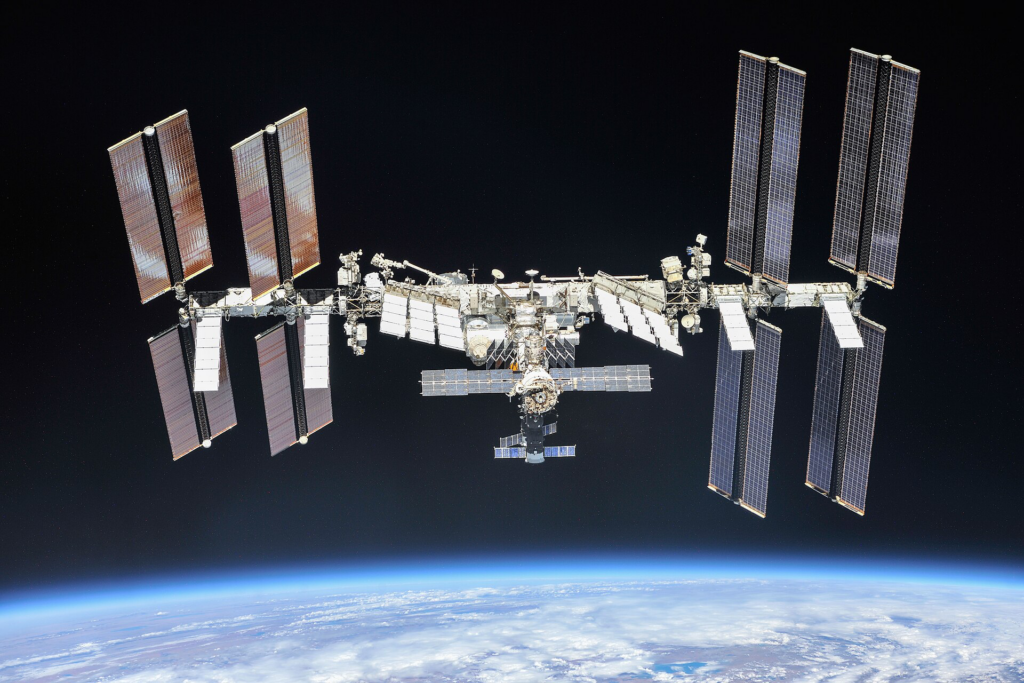
Space is a special domain of science diplomacy: it’s a subject of diplomacy by itself and an environment that enables solving other problems, often subject to other diplomatic efforts. For example, space infrastructure helps monitor climate change and compliance with nuclear disarmament treaties and can enable communication, telemedicine, and education in remote communities. “There are multiple angles to space, it is not only science but there are humanitarian considerations, arts, politics, law, anthropology, among many others. One person coming from one discipline cannot alone understand the broader implications,” says Martina Elia Vitolini, a School attendee pursuing a PhD in space law at McGill University.
Arctic Diplomacy
The Arctic is an equally critical area governed by science diplomacy: it hosts vital economic and trade routes and helps regulate Earth’s climate, while ice cores in pristine Arctic environments are used to understand fate and transport of pollutants of global concern such as chlorofluorocarbons, microplastics, and PFAS. We previously covered how combining polar tourism with media promotes engagement with climate change issues in the Arctic.
“The Arctic is a case study with our globally-interconnected civilization, balancing national interests and common interests where nations and international spaces co-exist.”
– Prof. Paul Arthur Berkman, Founder and President of the Science Diplomacy Center
A unique science diplomacy dimension in the Arctic relates to addressing historical injustices, achieving reconciliation, and securing self-governance for Indigenous people. This is because unlike space, Arctic diplomacy deals with both historic wrongs and ways to build a shared future with those who live and work on this land. Some key milestones in Arctic and Indigenous diplomacy include the 2007 United Nations Declaration on the Rights of Indigenous Peoples on an international level, as well as work of the Truth and Reconciliation Commission of Canada (2008-2015) on a national level. This is a key vector of Arctic diplomacy as many global challenges manifest locally on their land.
What Type of Science Communication is Science Diplomacy?
There are four models of science communication:
- the deficit model, which assumes that the public lacks scientific literacy and scientists improve it by educating homogeneously through one-way communication;
- the contextual model, which recognized different backgrounds and individual experiences of the audience;
- the lay expertise model, which integrates community expertise into the knowledge exchange; and
- the participation model, which involves scientists, the public, and policymakers into the communication process.
Because science diplomacy deals with complex, multidimensional issues, it requires skills in communicating across disciplines, cultures, and time, and the communication method must adapt to the context. Here, we examine how science diplomacy overlaps with scicomm models.
Communicating Across Disciplines
Working on science diplomacy means constantly engaging in communication across professions and areas of expertise, both internally and externally. For example, commissioners of the Truth and Reconciliation Commission of Canada came from legal and communication backgrounds, while high-level staff included professionals in history, education, policy and public governance, advocacy, and social sciences. This cross-disciplinary composition of the Commission was critical for the execution of their mandate.
Externally, the Commission also actively engaged with a diverse research community and ultimately informed international conversations on transitional justice and Indigenous rights. This made the Commission an important diplomatic actor contributing to knowledge diplomacy, a field where communication is key. Because this communication targets diverse audiences that are taken into account at each discrete case, science diplomacy across disciplines is an example of a contextual model.
Communicating Across Cultures
Because science diplomacy often involves cross-border relations, it is important to remember that cultures can differ greatly, which can lead to different approaches and priorities in science. For example, while some might see the Moon as an environment for scientific discovery, others might look at it as an opportunity for economic development, which is currently reflected in contemporary negotiations around space governance.
However, communicating across cultures does not only happen internationally. In the case of the Arctic, western science is often integrated with Indigenous Knowledge and Traditional Ecological Knowledge. In The Arctic Council, Indigenous organizations participate as Permanent Participants, helping shape research questions and interpret findings in areas of climate change, biodiversity, sustainable development, and other. “The synergies between western science and Indigenous knowledge exist with commonalities across the natural sciences, social sciences and Indigenous knowledge – all of which are evolving over millennia – each applying methods (albeit different) to interpret patterns, trends and processes that are fundamental to decision making across time,” says Prof. Paul Arthur Berkman, expert in science and Arctic diplomacy and one of the School’s co-organizers and lecturers. Therefore, science diplomacy across cultures is an example of the lay expertise model.
Communicating Across Time
What sets science diplomacy apart from other diplomatic domains is that its effects are often long-lasting, such as the impact of climate change on melting glaciers. At the same time, scientific projects take years (or even decades) to become fruitful, while their effects can be seen on scales far exceeding career spans of scientists working on them. For example, the James Webb Space Telescope, a collaboration between the US, Europe, and Canada, was conceived in 1996 and finally launched in 2022, providing a wealth of data to be analyzed by generations of researchers.
In science diplomacy, decision-making needs to not only consider the realities of today, but also the big questions and issues of tomorrow (or 30 years, in the case of the JWST). In practice, forward-thinking initiatives must survive changes in governments, priorities in funding, and immediate societal needs. Effective science diplomacy therefore requires communication across generations of scientists, policymakers, and civil society. Each group, both when it comes to their field and whether they were the ones to start, implement, or benefit from the initiative, will bring something different to the table. This makes science diplomacy across time an example of the participation model.
What about the Deficit Model?
The deficit model does not support multi-directional communication and does not take into account the socio-cultural background of receivers. The latter will often make communication efforts not fruitful: a message tailored to everyone is not tailored to anyone and therefore at least basic assumptions about audiences need to be made. The former just simply goes against the very underpinnings of diplomacy, which requires at least bilateral communication. In that sense, from the perspective of science communication, science diplomacy efforts are best structured through contextual, lay expertise, or participation models.
In practice, as knowledge translates into decisions and policies, these models co-exist in science diplomacy. For example, ensuring self-determination of Indigenous people requires considering cultural context, incorporating local knowledge, and involving diverse parties to be fruitful. The same goes for most issues topical for outer space and the Arctic. This makes events like the Summer School on Science Diplomacy for Outer Space and the Arctic—which brought together participants from different countries, disciplines, and career stages—perfect sandboxes to learn how to address science diplomacy issues through effective, tailored, and thoughtful communication.
Our key takeaway: Science diplomacy involves building bridges through disciplines, cultures, and time. This means that communication involved in science diplomacy is inherently complex, and needs to be tailored, inclusive, and forward-thinking.
—
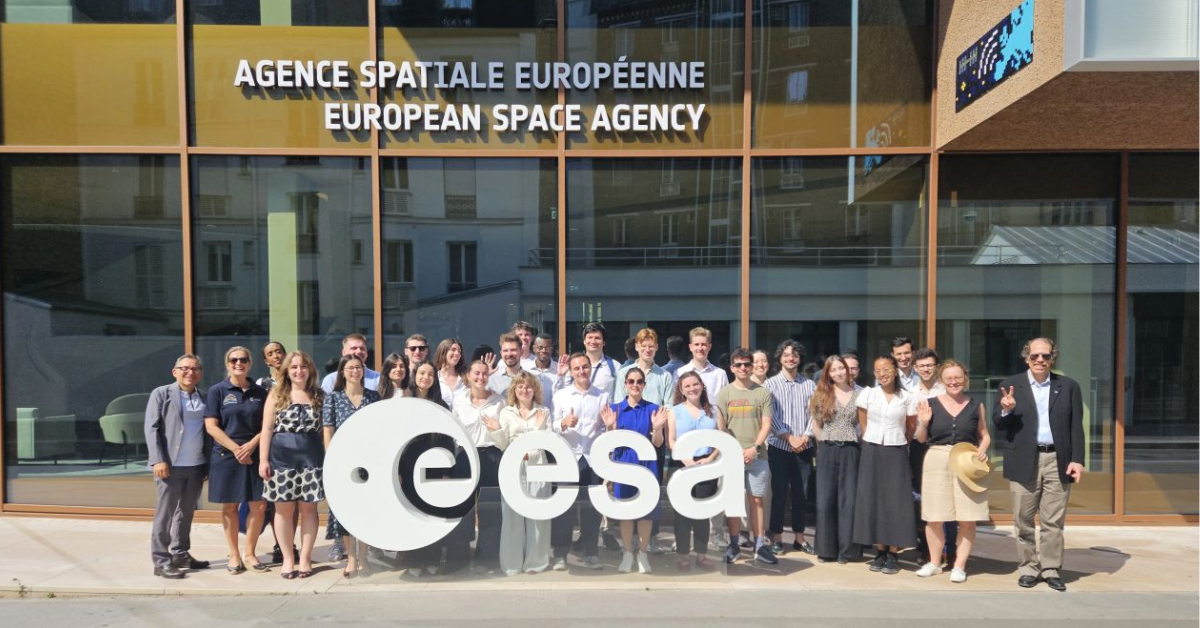
Alt text for featured image: Participants, organizers, and lecturers of the Summer School posing at the headquarters of the European Space Agency in Paris, France.
While Nik’s attendance of the Summer School was funded by France 2030 through ANR, opinions expressed in this post – excluding quotes – belong to the author and do not necessarily express views of the Summer School didactic and organizing team. SciCommBites acknowledges Prof. Paul Arthur Berkman for his feedback on the final draft.
Written by Mykyta ‘Nik’ Kliapets
Edited by Kay McCallum
Featured image credit: Summer School on Science Diplomacy for Outer Space and Arctic